(01)
.jpg)
Studios
Digital Content Production Arm (Coming Soon)
(02)
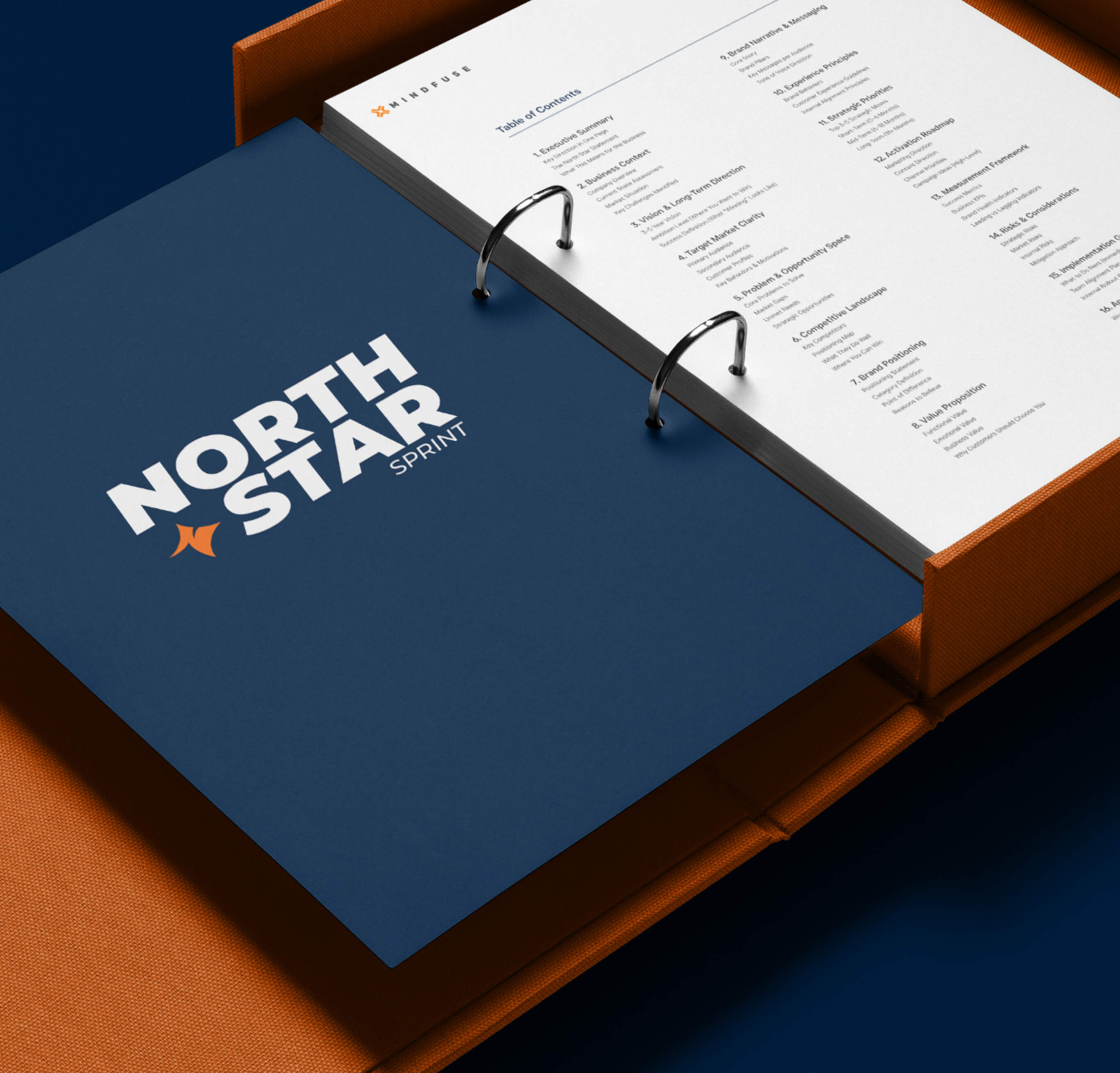
North Star Sprint
Strategic Alignment Workshop
(03)

Cortex
AI Powered Intelligence Software
(Exclusive to Clients)
(Exclusive to Clients)
Close
On January 22, 2025, more than 100 entrepreneurs, marketing professionals, and university students gathered at the Globe Tower in Bonifacio Global City for "Spark Up and Scale Up," a digital branding workshop organized by PhilSTAR Media Group's Business World in partnership with Globe Business.
The event was part of the Nakakalocal campaign, an initiative by PhilSTAR Media Group aimed at empowering micro, small, and medium enterprises (MSMEs) across the Philippines. The workshop featured three speakers covering different aspects of digital business growth: Globe Business Ambassador and Sewn Sandals founder Mariel Veluz on digital branding strategies, Lazada Philippines' Cri Evangelio on growing through e-commerce, and Mindfuse Inc. founder and CEO Jay Bernabe on brand building in the digital age.
Bernabe's session, which served as the afternoon's featured presentation, drew from his 15 years of experience in brand strategy and marketing communications. Rather than discussing branding in abstract terms, he focused on showing the audience how real businesses, both global and local, have applied branding principles to stand out in crowded markets.
The presentation resonated strongly with the room. As one small business owner in attendance put it: "Many branding talks leave you feeling inspired but unsure what to do next. Sir Jay's approach gave us concrete steps we could implement immediately, even with our limited marketing team."
Bernabe opened his presentation with an unexpected example: Red Bull.
At first glance, Red Bull seems like a strange reference point for Filipino MSMEs. It is a global brand with a massive marketing budget. But Bernabe was not pointing to their spending power. He was pointing to their discipline.
Red Bull sells energy drinks. But their marketing looks nothing like what you would expect from a beverage company. They sponsor Formula 1 racing, extreme sports events, and music festivals. They produce documentaries and run their own content studio. They even have their own roster of athletes.
The thing that ties all of it together is one idea: energy. Pushing limits. Living boldly.
"What makes Red Bull remarkable isn't their budget," Bernabe told the audience. "It's their unwavering commitment to a consistent brand message across every touchpoint. Even small businesses can apply this principle without breaking the bank."
This was the first major takeaway of the session. Most MSMEs do not have a branding problem because they lack money. They have a branding problem because they lack consistency. Their Facebook page says one thing. Their physical store says another. Their packaging tells a completely different story. Every campaign starts from scratch because there is no underlying message connecting them.
Red Bull does not sponsor chess tournaments. They do not produce content about home gardening. Every decision they make filters through that one central idea. And that kind of discipline does not cost anything. It just requires a decision.
Bernabe encouraged the audience to apply this same thinking to their own businesses, regardless of size. A small coffee shop that commits to being the neighborhood's "third place" for conversation and quiet time should let that idea shape everything, from the music they play to the way their baristas greet regulars. A bakery that builds its brand around heritage recipes should let that story show up in the packaging, the store design, and the social media posts.
The point was not about copying Red Bull. The point was about picking one clear idea and refusing to deviate from it.
Bernabe's second major case study was Disney.
He acknowledged that, like Red Bull, Disney is an enormous company. But the lesson he drew from Disney was not about scale. It was about method. Specifically, it was about how Disney uses storytelling to build emotional connections with customers.
Disney does not just sell movies and theme park tickets. They sell feelings. Joy. Wonder. The experience of being a child again. Every product, every park experience, and every piece of content is designed to create those emotions.
Bernabe broke this approach down into three components that any business, regardless of size, can apply.
The first component was about understanding the emotion behind a purchase.
A parent does not buy a Disney theme park ticket to stand in line. They buy it because they want to see the look on their child's face when they meet their favorite character. That moment of pure joy is what Disney is actually selling.
Bernabe asked the audience to think about their own businesses in the same way. What feeling does your product or service actually create for your customer?
A tutorial center, for example, is not really selling math lessons. It is selling the relief a parent feels when their child's grades improve. It is selling the confidence a student gains when a difficult subject finally starts to make sense.
A catering business is not selling food. It is selling the peace of mind that comes from knowing the food is handled so the host can actually enjoy their own event.
When a business understands the emotion it creates, its marketing becomes more effective. Instead of talking about features ("We offer personalized math tutoring with certified teachers"), it talks about outcomes ("Watch your child walk into the next exam with confidence").
The second component was consistency.
A touchpoint, Bernabe explained, is any moment where a customer interacts with a business. The website. The social media pages. The physical store. The packaging. The customer service experience. Even the parking area.
Disney is obsessive about this. Every cast member (they do not call them employees) is trained to stay "in character." The landscaping at their parks is meticulous. The music in each area matches the theme. Nothing is accidental.
Bernabe pointed out that most MSMEs have far fewer touchpoints than Disney. But each one still tells a story. And if that story is inconsistent, customers notice.
He gave the audience a practical exercise: list every point where a customer interacts with your business, from first discovery all the way through purchase and follow up. Then ask a simple question for each one: "Is this reinforcing what our brand stands for, or is it working against us?"
The point was not that every touchpoint needs to be expensive or elaborate. The point was that every touchpoint needs to be intentional.
The third component was follow through.
Bernabe drew a clear line between making a brand promise and actually keeping it. A brand promise is the commitment a business makes to its customers. It does not have to be written on the wall. Sometimes it is implied by the way a business presents itself.
He used Jollibee as a local example. Jollibee's brand is built around family and joy. Visit any branch and you see it: birthday party packages for kids, family meal deals, advertising that revolves around family moments. The brand promise and the actual customer experience match.
"Crafting a great brand promise will get you buyers," Bernabe told the audience. "But deliver on that promise and you will have loyal customers."
That distinction between buyers and loyal customers was a theme he returned to throughout the session. A buyer comes once. A loyal customer comes back, recommends you to others, and defends your brand when someone questions it.
One of the most practical parts of Bernabe's presentation was his advice on how businesses should talk about themselves.
"Always tell a story based on how your products or services can address the challenges of your consumers," he told the audience.
This advice sounds straightforward, but it goes against the instinct of most business owners. The natural tendency is to talk about the business itself: how long it has been operating, what certifications it has, what new products it has launched.
The problem, Bernabe explained, is that customers do not care about any of that. Customers care about their own problems. They care about whether a business can solve those problems.
He demonstrated the difference by walking the audience through examples.
A business that says "Our salon uses premium imported hair products from Korea" is talking about itself. A business that says "Tired of hair treatments that fade after one wash? Our treatments last up to eight weeks" is talking about the customer's problem and offering a solution.
A business that says "We have been manufacturing furniture for 25 years" is sharing a fact about itself. A business that says "Your grandchildren will sit on the same chair you buy today" is telling the customer what those 25 years actually mean for them.
Bernabe walked the audience through a simple framework for applying this thinking to any piece of content:
First, identify the customer's actual problem. What frustrates them? What are they struggling with?
Second, show that you understand the problem. Use their language, not industry language.
Third, position your product or service as the bridge between the problem and the solution. Not as the hero of the story. The customer is the hero. The business is the tool that helps the hero succeed.
Fourth, paint a picture of what life looks like after the problem is solved. Be specific.
This framework, he noted, applies to everything: social media posts, website copy, sales conversations, even the way a business owner explains what they do at a networking event.
What distinguished Bernabe's session from a typical conference talk was the emphasis on immediate application.
Rather than ending with general advice, he provided the audience with tactical worksheets and decision frameworks they could use right away. The interactive portion of the session included exercises where participants began mapping their target markets and building audience profiles on the spot.
Target market definition was a recurring theme. Bernabe pushed back against the common tendency among small business owners to define their audience too broadly. "Everyone" is not a target market. Neither is a vague demographic like "men and women aged 18 to 65."
He walked the audience through the process of getting specific: What problem does your ideal customer have? Where do they spend their time, both online and offline? What do they value most? And what are they currently using instead of your product or service?
That last question, he emphasized, is especially important. A business's real competition is often not who they think it is. A small printing business competing for customers is not just up against other printing shops. It is up against Canva, against the business owner's nephew who "knows Photoshop," against the company admin who puts together materials in PowerPoint. Understanding the actual alternatives a customer is choosing between changes how a business positions itself.
The worksheets gave participants a structured way to think through these questions rather than leaving them to figure it out after the event.
Jay Bernabe is the founder and CEO of Mindfuse, a strategy led branding and digital agency based in Manila. Mindfuse helps companies clarify their direction, strengthen their brand, and build better customer experiences through brand strategy, identity design, website development, and content and marketing strategy.
How can small businesses in the Philippines build a strong brand?
The most common branding problem among Philippine MSMEs isn't budget, it's consistency. Most small businesses have a fragmented presence: the Facebook page says one thing, the physical store says another, each campaign starts from scratch. The fix starts with picking one clear idea and committing to it across every touchpoint. The way Red Bull has stayed anchored to "energy and pushing limits" across every content and sponsorship decision, regardless of budget. For small businesses, that means identifying the emotion your product or service actually creates for your customer, then making sure every interaction reinforces that same feeling.
What is the difference between marketing and branding for small businesses?
Marketing is what you say to specific audiences at specific moments. Branding is what people believe about you when you're not saying anything. A small business that stops posting on social media for a month is pausing its marketing - but the brand impression it's already created in customers' minds doesn't pause. The practical implication is that branding decisions, what you stand for, who you're for, what makes you different , should come before marketing decisions about which platform to use or what to post. Most MSMEs get this backwards, and end up doing a lot of marketing without ever building a brand.


.jpg)