(01)
.jpg)
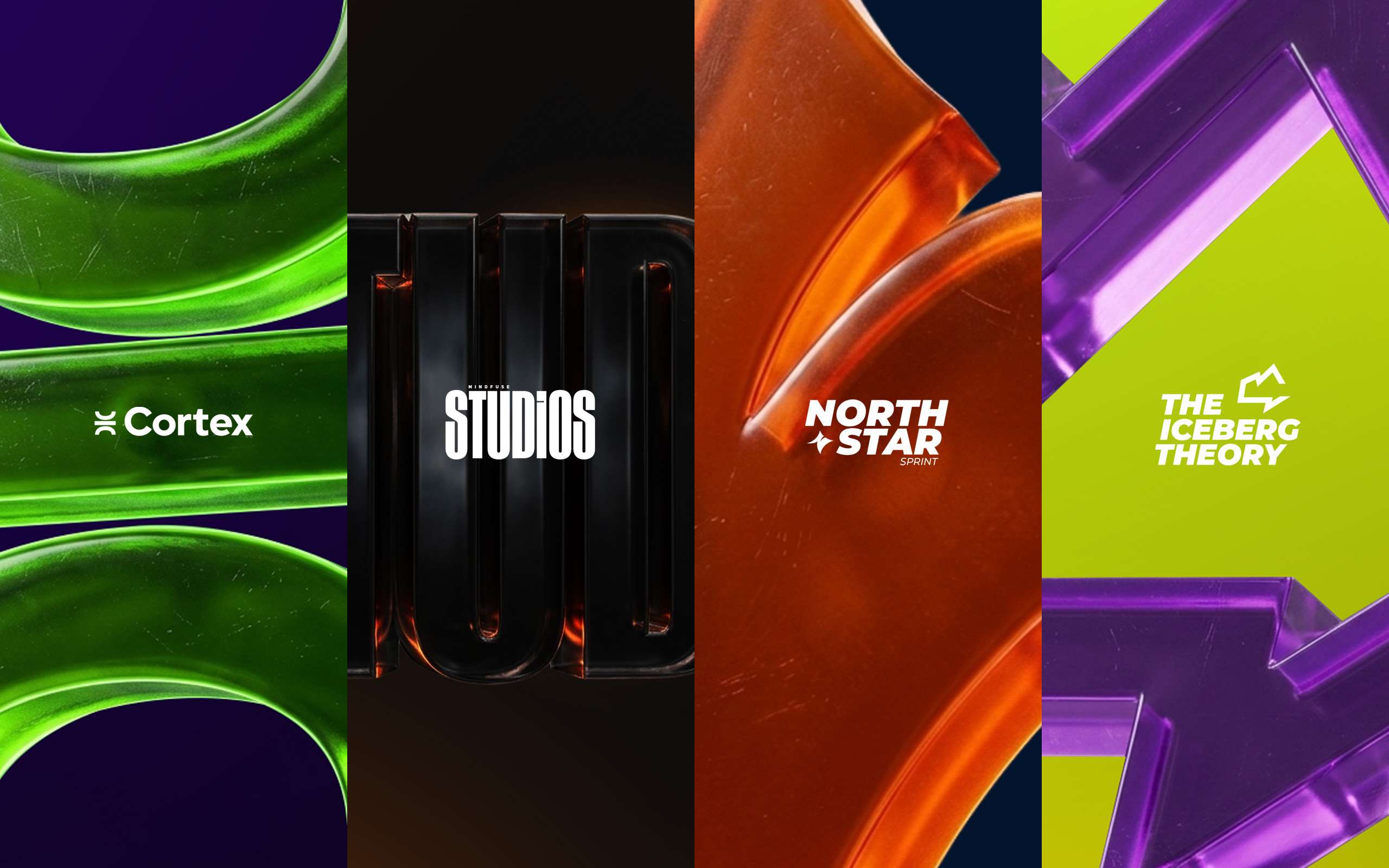
Studios
Digital Content Production Arm (Coming Soon)
(02)
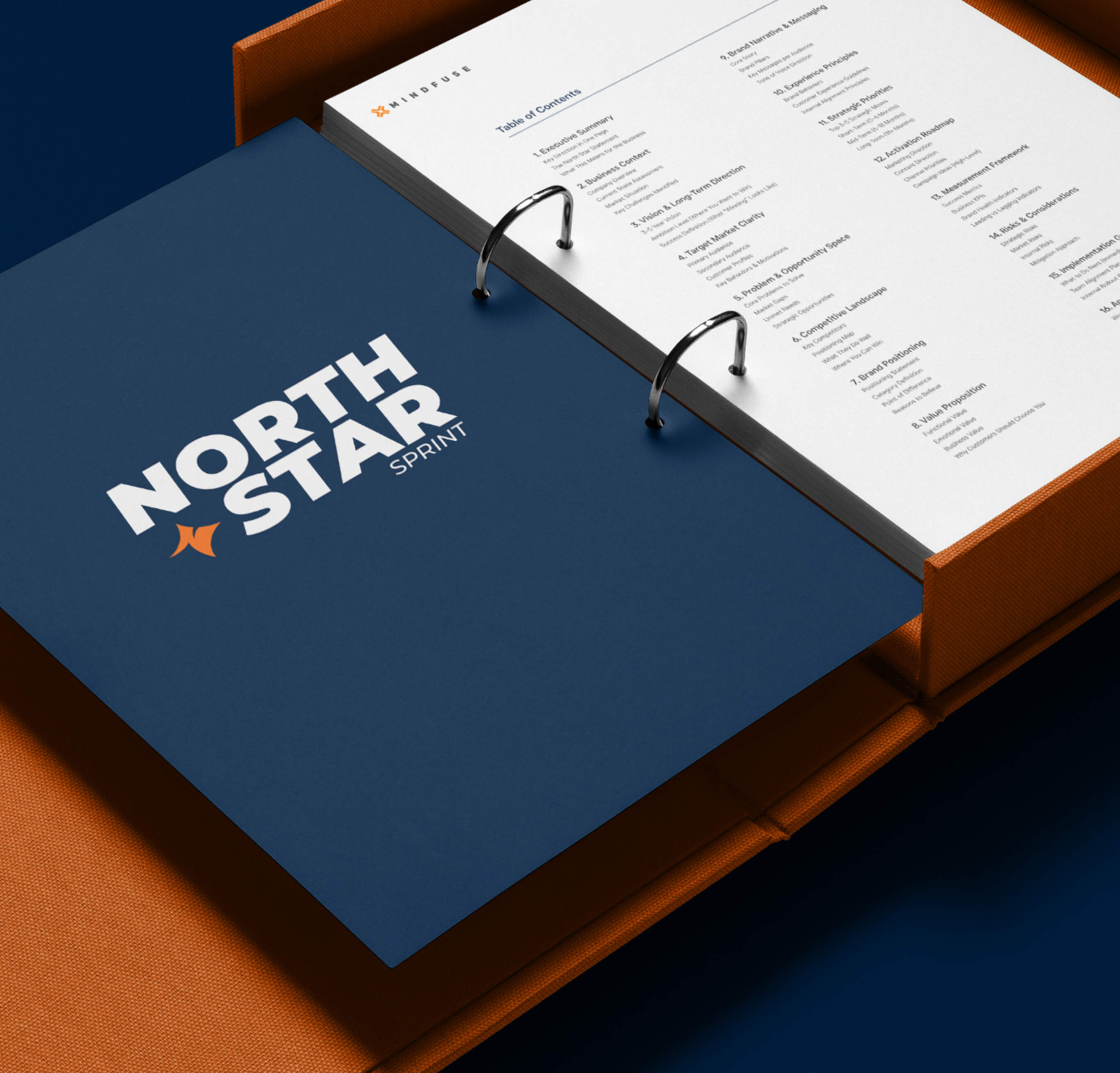
North Star Sprint
Strategic Alignment Workshop
(03)
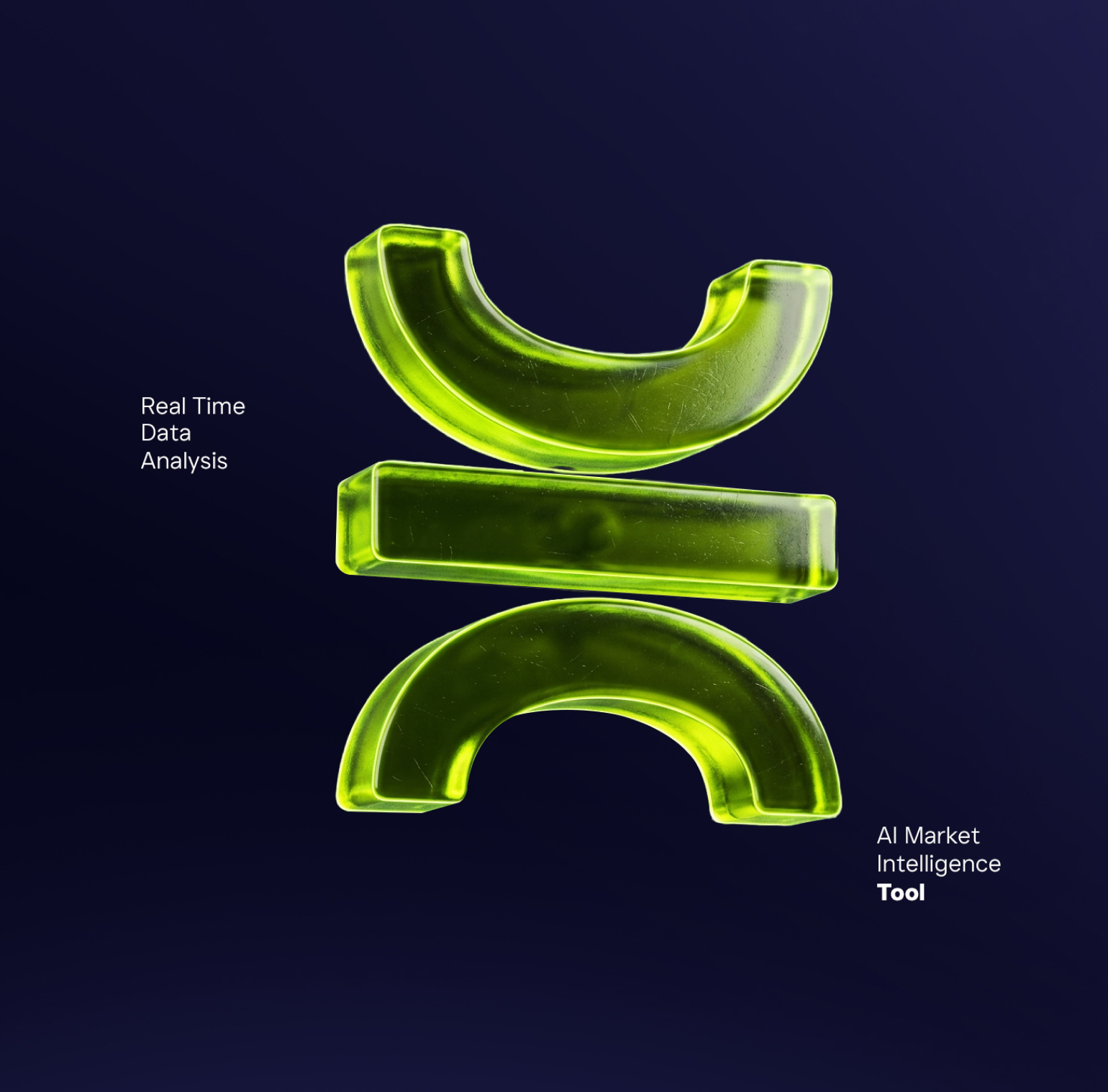
Cortex
AI Powered Intelligence Software
(Exclusive to Clients)
(Exclusive to Clients)
Close
Let's get the obvious out of the way first. Yes, we look different. The colors are warmer. The tone is more welcoming. The dark, moody palette that defined Mindfuse for the past several years is gone. If you've visited our website recently, scrolled through our social media, or received anything from us in the past few weeks, you've already noticed.
But if that's all you take away from this, we've failed.
Because this rebrand didn't start with design. It didn't start with a mood board or a color palette exploration or a conversation about typography. It started with something much less glamorous and much more important: a long, honest look at who we've become over the past eight years, what we've learned, and where we're going.
Mindfuse started eight years ago as a branding and digital agency in Manila. We were a small team with a clear belief: that branding is not decoration. It is direction. That the way a company presents itself to the world should be a reflection of where it's actually heading, not just a coat of paint on whatever already exists.
That belief hasn't changed. But almost everything else has.
In eight years, we've worked with clients across industries, from Angel's Pizza and Vista Cinemas to PTT Philippines, WalterMart, Colliers International, Rockwell Club, Lalamove, Mercantile Insurance, Himalaya Herbals, and PPCRV during the 2022 elections. We've built brands from scratch for startups. We've helped established companies find clarity when growth made things complicated. We've launched campaigns, designed identities, built websites, produced content, and sat in more boardrooms than we can count.
And through all of that, we accumulated something you can only get by doing the work over and over again, across different industries, with different kinds of organizations, under different kinds of pressure. We built a depth of understanding that compounds over time, project by project, refinement by refinement.
At some point, we looked at ourselves and realized: the company we are today is fundamentally different from the company we were when we started. Our thinking is sharper. Our processes are more cohesive. Our understanding of what our clients actually need runs deeper than ever. Our service isn't perfect. We'd never claim that. But it's more refined than it's ever been.
The old brand no longer represented who we'd become. That's why we rebranded.

When people hear "rebrand," they usually think about a new logo. Maybe new colors. Maybe a refreshed website.
Those things are part of it. But they're the output, not the input. Here's what actually changed inside Mindfuse before we ever opened a design file.
Eight years of client work has given us something invaluable: battle-tested systems that make great work repeatable. How we onboard clients. How we run discovery. How we manage feedback. How we present work. How we track progress.
None of this is exciting to talk about, but it's the difference between an agency that delivers great work sometimes and one that delivers it reliably.
For our clients, this means fewer surprises, clearer timelines, and a smoother working relationship from start to finish. Every project follows a structure that keeps things on track, while still leaving room for the creative exploration that produces the best results.
We have more people now. Not just more bodies, but more capability. Strategists, designers, developers, content producers, project managers. A team that can handle the full spectrum of what branding and digital work requires without spreading thin.
We also have better tools. Some of those tools we've built ourselves. More on that later. Others are platforms and technologies that let us work faster, collaborate better, and deliver at a level that reflects where we are today.
This is the hardest one to quantify, but it might be the most important.
In year one, we knew our job was to make brands look great. By year three, we understood that our job was to make brands make sense, to help companies get clear on what they stand for before we designed anything. By year five, we realized that even clarity isn't enough if the organization isn't aligned around it, that brand strategy falls apart when leadership isn't on the same page about where the company is going.
That evolution in understanding is what led to our new offerings. We didn't create new services because we needed more things to sell. We created them because we kept encountering the same gaps in our clients' businesses, gaps that our existing services couldn't fill.
This is the service we wish we'd had from the beginning.
Over eight years of client work, we noticed a pattern. Companies would come to us for branding, a new identity, a website, a campaign. And within the first few meetings, it would become clear that the branding wasn't the real problem. The real problem was that the leadership team wasn't aligned on the fundamentals.
Where is this company going? What are we actually trying to build? Who are we really for? What makes us different in a way that actually matters?
Without answers to those questions, any branding work is built on an unstable foundation. You can design a beautiful identity, but if the leadership team has three different visions for the company, that identity will get pulled in three directions and end up meaning nothing.
The North Star Sprint is our answer to this problem. It's a structured, four-week strategic workshop designed to align leadership teams before any branding or marketing work begins.
The North Star Sprint doesn't produce a logo or a website. It produces something more valuable: alignment. And in our experience, companies that invest in alignment before they invest in execution get dramatically better results from everything that follows.
This is our response to something we saw happening across almost every industry we work in: brands that had strong identities but struggled to sustain their presence where audiences actually spend their time.
A company would invest in a brand strategy and a beautiful visual identity. But then the challenge becomes producing consistent, high-quality social media content day after day to keep the brand alive and visible. The gap between "having a great brand" and "showing up like a great brand every day" is where a lot of companies stall.
Mindfuse Studios is our digital content production arm. It's focused specifically on producing social media content for brands, including photo, video, and creative assets designed for the platforms where audiences actually spend their time. We work with restaurants, real estate companies, lifestyle brands, and other businesses that need a steady stream of professional content but don't have the internal capacity to produce it.
Studios isn't a separate company. It's an extension of Mindfuse that ensures the brand strategy we help develop doesn't die in a PDF. It shows up in the real world, consistently, every day.
This one is different from anything we've offered before.
Cortex is our AI-powered market intelligence application. We built it because we believe the branding and marketing industry should be grounded in real data, not just experience and intuition.
Cortex helps us gather, organize, and analyze market information more effectively, so that the strategies we build for our clients are informed by the most complete and current picture available. It doesn't replace human judgment. It makes human judgment better by ensuring we're working with evidence, not assumptions.
For our clients, this means sharper positioning recommendations, more informed strategies, and decisions backed by data rather than opinion alone.
We’re also launching something that isn't a service at all. It's a business podcast.
The Iceberg Theory is designed for startups and new entrepreneurs who are trying to understand how business actually works. The name reflects a belief we've held for a long time: that the visible part of any successful business, the brand, the product, the marketing, is just the tip. Beneath the surface is everything that makes it work: strategy, operations, team management, financial planning, decision-making frameworks, and the unglamorous daily discipline of building something real.
Most business content online focuses on the tip. The Iceberg Theory focuses on what's underneath.
We created it because we've spent eight years watching talented founders work through the challenge of building something sustainable. Not because their ideas were bad, but because the operational and strategic foundations that turn a good idea into a sustainable business aren't always easy to find. This is our way of contributing to that education, making the lessons we've learned accessible to people who are just getting started.
If you've read this far, you understand why we say the look is the last part of the story. But it matters, so let's talk about it.
The old Mindfuse identity was dark. Heavy. It used deep tones, strong contrasts, and a visual language that communicated seriousness and authority. And for its time, it did the job well. It helped us establish credibility and signaled that we took the work seriously.
But as we grew, we recognized that our brand needed to reflect the way we actually work with people today. Our client relationships are collaborative, not intimidating. Our process is designed to be inviting, not imposing. The best work we do happens when clients feel comfortable being honest with us about their challenges, their uncertainties, and their real goals. And a brand that looks like a fortress doesn't exactly encourage that kind of openness.
The new identity is warmer. More welcoming. More human. We moved to a palette that feels approachable without sacrificing professionalism. The verbal identity shifted too. More conversational, more direct, less corporate.
This wasn't about following a design trend. It was about closing the gap between how we actually show up for our clients and how we were presenting ourselves to the world. The old identity was armor. The new identity is an open door.

A rebrand is as much about what you keep as what you change. Here's what stayed the same.
Our core belief hasn't moved. We still believe that branding is not decoration. It's direction. It's the clearest expression of where a company is going, who it's for, and why it matters. That belief has guided every project we've taken on for eight years, and it will guide the next eight.
Our commitment to strategy-first hasn't changed. We still won't design a logo, a website or anything else until we understand the business behind it. We still push back when clients want to jump to execution before the strategy is clear. We still believe that the thinking before the design is where the real value lives.
Our focus on the Philippine market hasn't changed. We're a Manila-based agency. We understand the local market, the local consumer, the local business environment. We work with international clients and apply global standards, but our home is here and the insights we bring are grounded in the realities of doing business in the Philippines.
We could have just posted a new logo on social media, shared a few before-and-after mockups, and called it a day. That's what most agencies do when they rebrand. And honestly, it probably would have gotten just as many likes.
But that would have been exactly the kind of rebrand we tell our clients not to do. The kind that's all surface and no substance. The kind where you change how you look without thinking about why you look the way you do.
We wrote this article because we believe in practicing what we preach. We've spent eight years telling companies that branding starts with clarity, not aesthetics. That you need to know who you are and where you're going before you design anything. That the visual identity should be the last piece, not the first.
This rebrand followed that exact process. We looked inward first. We assessed what had evolved about our business, our capabilities, and our understanding of the market. We defined what the Mindfuse of today actually looks and feels like. We built new offerings to address the patterns we kept seeing in our clients' businesses. And only then, after all of that was clear, did we touch the visuals.
The new Mindfuse is not just a prettier version of the old one. It's a more capable, more refined, more intentional version, with the brand to match.
The honest answer is that most agency rebrands are surface-level, new colors, a refreshed logo, a few before-and-after posts. What should drive a rebrand is something more fundamental: a recognition that the company has evolved in ways the existing brand no longer reflects. For Mindfuse, the trigger wasn't aesthetic. After eight years and work across eleven industries, the agency's thinking, processes, and capabilities had become meaningfully sharper. The old brand communicated authority through a dark, heavy visual language. The new one needed to reflect how Mindfuse actually works with clients today. Collaboratively, openly, and with a process built around making clients feel comfortable being honest about their real challenges.
A rebrand should start long before anyone opens a design file. The first step is an honest internal assessment: what has actually changed about the business, and what does it need to represent going forward? From there, the work moves through messaging and verbal identity before touching visuals - because the visual identity should be the expression of a clear direction, not a substitute for one. Mindfuse's own rebrand followed that sequence: internal assessment, new offerings developed to address patterns seen across client work, a verbal shift from corporate to conversational, and only then the visual refresh. The result is a brand that accurately reflects the business behind it, not just a prettier version of what existed before.

.jpg)